Apple Fold Mobile
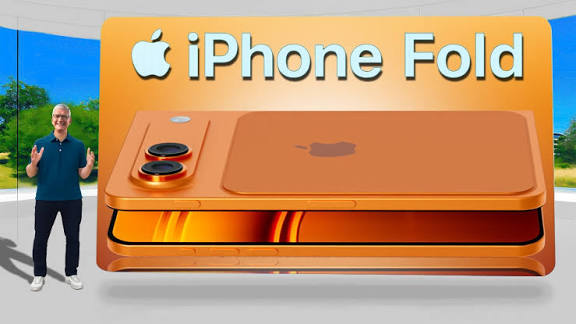
The world of smartphones has been bending—literally—for several years. As competitors have launched and refined foldable devices, one question persists with growing intensity: When will Apple respond? While the “iPhone Fold” remains a product of speculation and desire rather than official announcement, we can piece together a compelling vision of what Apple’s first foray into foldables might entail. This isn’t a report on leaks, but a conceptual exploration built on Apple’s design principles, patent filings, and the evolving needs of the premium market.
The Display: Seamless Fusion, Not Just a Fold And Apple Fold Mobile
Apple would never release a mere “me-too” product. Their foldable display wouldn’t just bend; it would aim to disappear the fold itself.
· The Invisible Crease: The most significant challenge—and Apple’s primary focus—would be creating a seamless, durable viewing experience. We could see a new generation of ultra-thin, hybrid glass composite developed in partnership with Corning. The goal would be a main inner display where the fold is virtually undetectable to both the eye and the fingertip, maintaining the iconic Apple tactility.
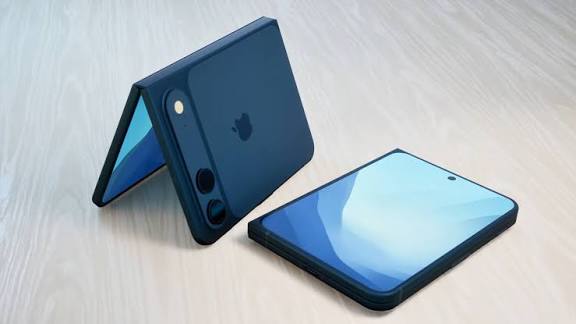
· A Dual-Phase Experience: Imagine an outer “Cover Screen” that is fully functional, akin to a modern iPhone mini, allowing for quick tasks. Unfolding it would reveal a near-square or book-style main display around 8 inches, offering a transformative canvas for multitasking, drawing, and immersive media. ProMotion technology would be a given, with adaptive refresh rates across both panels.
· Hinge as a Hero: The hinge mechanism would be an engineering marvel—silent, smooth, and capable of holding positions at various angles for hands-free use (laptop mode, tent mode, etc.), all while being remarkably slim and robust.
The Camera System: One System, Two Perspectives Iphone
Apple would likely avoid the complexity of multiple camera arrays. Instead, they might refine a singular, pro-grade system that works intelligently in both folded and unfolded states.
· Unified Pro-Grade Array: The device would likely inherit the best triple or quad-camera system from the contemporary iPhone Pro lineup. The innovation would lie in software and form factor.
· The New “Selfie” Paradigm: Why have a dedicated, lower-quality inner front camera? Apple could leverage the main, superior rear cameras for selfies and video calls when the device is unfolded, using the large internal display as a stunning viewfinder. The outer Cover Screen would utilize a single high-quality front-facing camera for traditional use when closed.
· Software Magic: New iOS features would emerge to leverage the fold. Think “Director’s View” on the main screen while filming with the rear cameras, or effortless switching between capturing a subject on the Cover Screen and reviewing the gallery on the main display.
Performance & The Architecture of a New Form Foldable Iphone
This wouldn’t just be a new iPhone; it would be a new kind of iPhone, requiring rethinking from the inside out.
· Chipset & Thermal Design: It would run on the most powerful Apple Silicon of its generation. However, the unique challenge would be thermal management in a thin, folding chassis. We might see innovative heat dissipation materials and a spatially aware chip layout to distribute heat evenly away from the fold.· Battery Duet: To accommodate the two displays and powerful chipset, a dual-battery system connected by a flexible circuit would be essential. The focus would be on all-day battery life, with optimizations for which screen is in use. Charging would likely be a mix of high-speed MagSafe and USB-C.
· iOS, Unfolded: This is where the magic would truly happen. Apple’s strength is cohesive hardware-software integration. A foldable iPhone would debut a new layer of iOS—let’s call it “iOS Flex”—with intuitive gestures, app pairs that remember their state, and entirely new multi-window productivity features that feel native, not tacked-on.
Design & Build: The Statement
· Materials: A folding iPhone would be the new halo product. Expect the finest materials: a titanium or ceramic frame with a textured, durable outer glass. It would feel incredibly premium and solid in both forms.
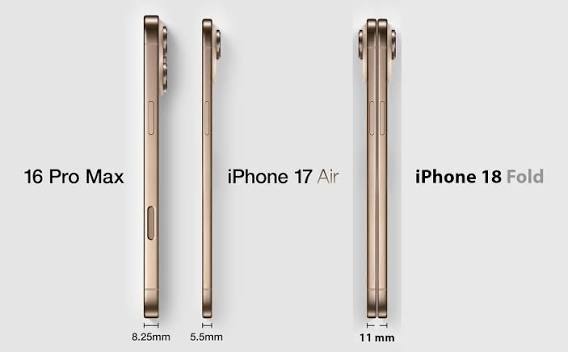
· In the Hand: When folded, it would be a thick, pocketable slab—a statement piece. Unfolded, it would be a remarkably thin tablet. The ergonomics would be meticulously studied to feel comfortable in all modes.
Release Date & Price: The Premium of Pioneering
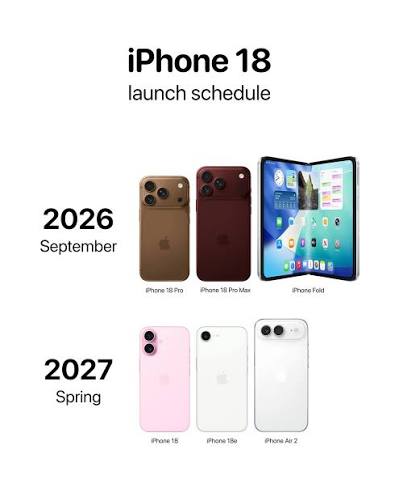
· Release Date: Apple moves deliberately. Given the complexity, a 2026 or even 2027 timeline seems most realistic. It would likely be announced at a special spring or fall event, positioned as a new category alongside the traditional iPhone lineup.
· Price: This would be Apple’s most expensive iPhone by a significant margin. As a first-generation, niche, flagship-of-flagships product, a starting price in the range of $2,000 to $2,500 is a strong possibility, placing it in the realm of high-end laptops and signaling its status as a aspirational device.
Conclusion: The Risk and The Reward
An Apple iPhone Fold represents more than a new shape. It represents Apple’s willingness to reimagine its most iconic product for a new interaction paradigm. It wouldn’t be for everyone—initially. It would be for the pros, the creators, and the early adopters who live within the Apple ecosystem and crave a singular device that bridges the gap between pocket computer and creative tablet.
The journey from a rigid rectangle to a flexible canvas is perhaps the most significant hardware challenge of the decade. If anyone can frame it not as a gadget, but as a seamless next step in personal technology, it’s Apple. We’re not just waiting for a phone that folds; we’re waiting for Apple’s philosophy to unfold onto a new screen.
Samsung S26 Ultra Upcoming Features And Release Date
https://eduverse.live/index.php/2025/12/13/samsung-s26-ultra-upcoming-features-and-release-date/
Credit = https://www.apple.com/